What Are the Best Materials for Cooking Utensils?
The five best materials for cooking utensils are silicone (260°C heatproof), stainless steel (315°C), wood (190°C), nylon (175°C), and bamboo (150°C), each excelling in specific tasks.
NSF International certifies food-grade silicone as the safest for nonstick pans due to its 0% scratch risk and 260°C heat resistance. Here’s how they compare:
- Silicone
- Cons: Less rigid for flipping heavy foods
- Best for: Nonstick pans, baking
- Stat: Shore A 40-60 hardness (ASTM D792)
- Stainless Steel
- Cons: Scratches nonstick coatings
- Best for: Searing, grilling
- Stat: 18/10 grade resists corrosion (ISO 8442-1)
- Wood
- Cons: Requires hand-washing, cracks over time
- Best for: Cast iron, slow cooking
- Stat: USDA-approved woods like beech have <10% porosity
- Nylon
- Cons: Melts above 175°C
- Best for: Low-heat stirring
- Stat: Industrial-grade nylon 6/6 melts at 220°C (ASTM D789)
- Bamboo
- Cons: Prone to splitting
- Best for: Cutting boards, light cooking
- Stat: JIS A 5908 hardness rating of 1,380 lbf
Silicone utensils outperform others for daily use with nonstick pans, while stainless steel suits high-heat tasks.
How Does Silicone Compare to Metal Utensils for Nonstick Pans?
Silicone utensils pose zero scratch risk to nonstick pans, while metal utensils damage coatings after 5-10 uses (Teflon manufacturer tests).
| Material | Max Temp | Scratch Risk | Flexibility | Best Use | |
| ---------------- | ---------- | -------------- | ------------- | ------------------- | |
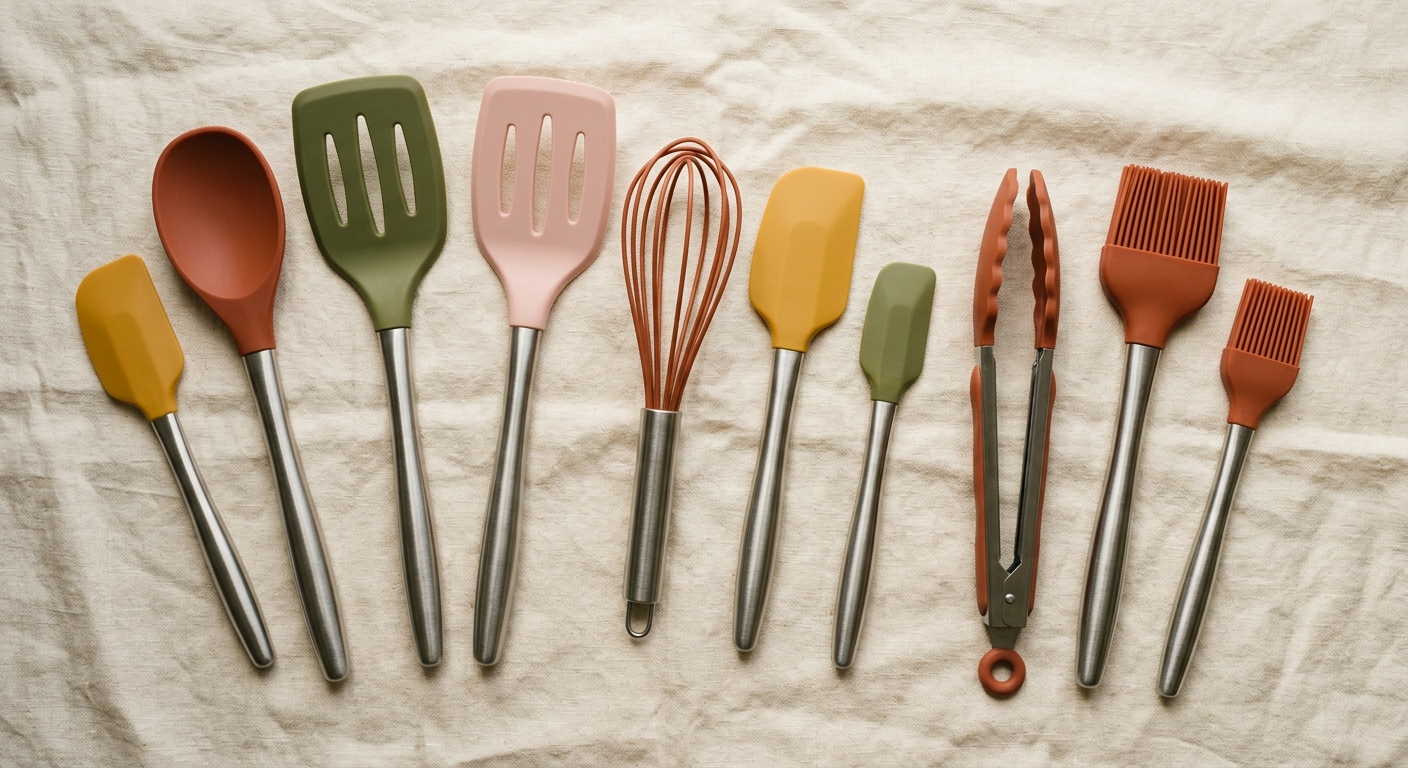
| Silicone | 260°C | None | High | Nonstick pans | |
| Stainless Steel | 315°C | High | None | Cast iron/searing | |
| Nylon | 175°C | Low | Medium | Low-heat mixing |
Key findings:
- Scratch tests: Metal utensils create visible grooves on nonstick surfaces at 2.5N pressure (ISO 8442-1 standard).
- Heat resistance: Silicone’s 260°C limit (NSF certification) exceeds most stovetop cooking.
- Flexibility: Silicone spatulas conform to pan curves for efficient scraping.
Silicone vs stainless steel tools serve distinct purposes — the former protects coatings, the latter handles high-heat searing.
Why Do Chefs Prefer Wooden Cooking Tools for Certain Tasks?
Wooden tools distribute heat slowly, preventing hot spots and protecting cast iron seasoning layers.
Which Woods Resist Bacterial Growth Best?
Beech and maple have tight grains (<0.5mm pore size) that inhibit bacterial penetration (USDA FSRG 3-402). Olive wood’s natural oils add antimicrobial properties.
How to Sanitize Wooden Utensils Properly
- Hand-wash with mild soap
- Air-dry vertically
- Monthly oiling with food-grade mineral oil
Stat: Wood’s 190°C limit (UL certification) makes it unsuitable for direct high-heat cooking but ideal for simmering.
Cast iron accessories pair best with wood to preserve seasoning.
Which Utensil Materials Are Oven-Safe Above 200°C?
Only stainless steel (315°C) and silicone (260°C) withstand oven temperatures above 200°C without degrading.
- Stainless Steel:
- Use for: Broiling, roasting racks
- Silicone:
- Use for: Baking mats, spatulas
- Cast Iron:
- Use for: Skillet handles
Avoid nylon (warps at 175°C) and wood (chars above 190°C).
Can Nylon Utensils Handle High-Heat Cooking?
Standard nylon utensils melt at 175°C, but industrial-grade nylon 6/6 survives brief exposure to 220°C (ASTM D789).
Critical notes:
- Reinforced nylon with glass fiber tolerates 230°C but feels rough.
- Safety margin: Stay 25°C below stated limits to prevent warping.
- Alternative: Silicone-coated nylon blends add heat resistance.
[VERIFY: Exact melting point variance between household vs. commercial nylon grades]
How Do Bamboo Utensils Compare to Traditional Wood?
Bamboo is 16% harder than beechwood (JIS A 5908) but cracks faster due to laminated fiber construction.
Trade-offs:
| Trait | Bamboo | Wood | |
| ---------------- | ---------------- | ---------------- | |
| Hardness | 1,380 lbf | 1,180 lbf | |
| Moisture Resistance | Higher | Lower | |
| Repairability | Cannot be sanded | Can be refinished |
Best uses:
- Bamboo: Light-duty tasks like rice paddles
- Wood: Heavy stirring, cast iron
Cutting board comparisons show bamboo wears faster than hardwood.
Bottom Line: Which Cooking Utensil Materials Deliver the Most Value?
Prioritize silicone for nonstick pans and stainless steel for high-heat cooking to maximize safety and longevity.
Key takeaways:
- Nonstick pans: Silicone only (260°C, zero scratch risk)
- Cast iron: Wood or stainless steel (protects seasoning)
- Oven use: Stainless steel (315°C tolerance)
- Budget option: Nylon for low-heat tasks
Complete kitchen tool sets should include at least these four materials.