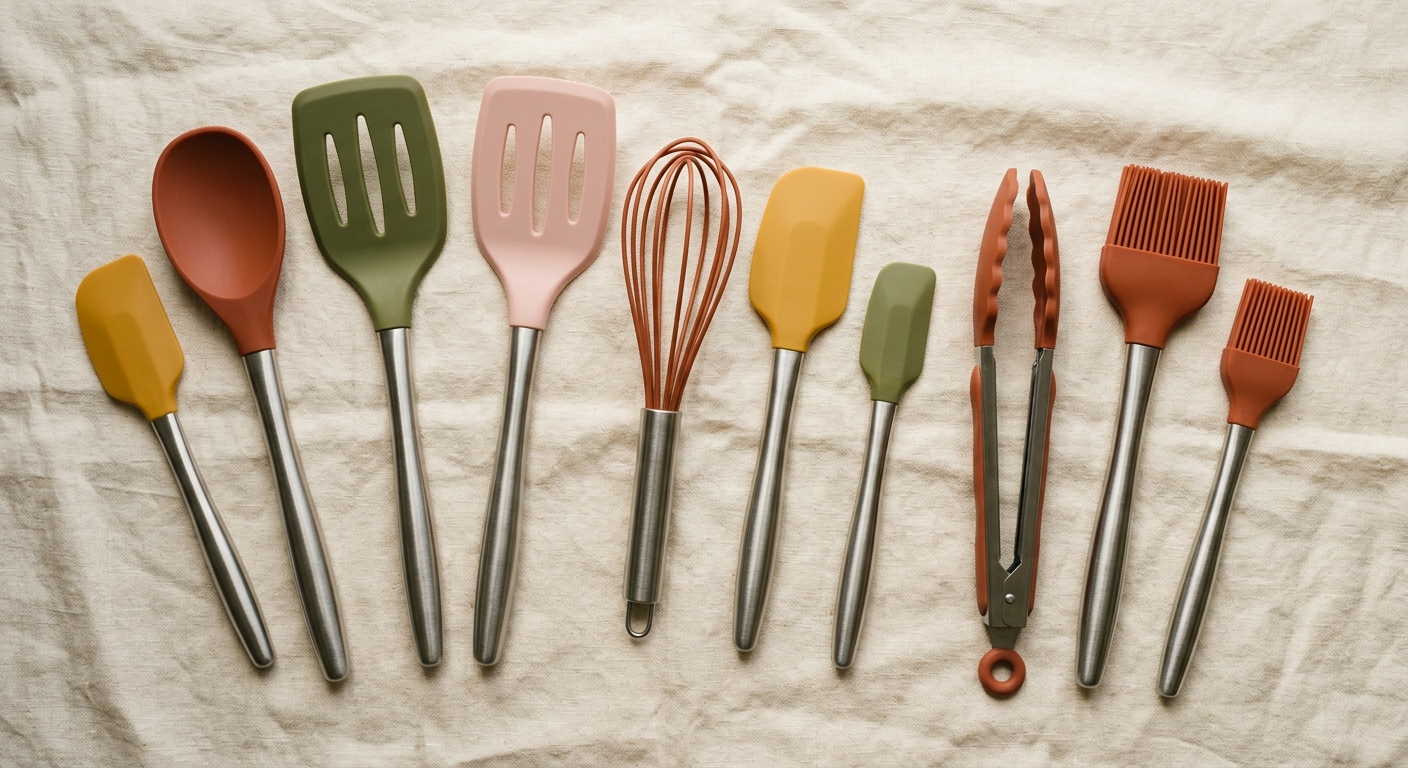
Why Choose Silicone Cookware Accessories?
Silicone cookware accessories are chosen for their heat resistance, non-scratch surfaces, and ease of cleaning. FDA-approved food grade silicone ensures safety for cooking, while its flexibility and durability make it ideal for everyday kitchen use.
The reason matters: silicone outperforms traditional materials like plastic and wood in heat tolerance and scratch resistance. Unlike plastic, silicone doesn’t melt or leach chemicals at high temperatures. Unlike metal, it won’t scratch non-stick pans. This makes it a versatile choice for modern kitchens.
Silicone’s heat resistance is a key advantage. High-quality silicone utensils withstand temperatures up to 450°F, making them safe for stovetop cooking, baking, and grilling. For example, silicone spatulas can handle hot oil without warping or melting, unlike plastic alternatives.
Another benefit is its non-scratch properties. Silicone utensils are gentle on cookware surfaces, including non-stick coatings and ceramic pans. This extends the life of your pots and pans, saving you money in the long run.
Cleaning silicone accessories is effortless. Most are dishwasher-safe, and their smooth surface resists stains and odors. Unlike wooden utensils, silicone doesn’t absorb liquids or harbor bacteria, making it more hygienic.
Worth knowing: silicone’s flexibility allows it to conform to various shapes, making it perfect for tasks like scraping bowls or flipping pancakes. Its durability ensures it lasts years with proper care.
For more on choosing the right materials for cooking utensils, visit our guide: Choosing the Best Materials for Cooking Utensils.
How Do Silicone Utensils Compare to Metal?
Silicone utensils outperform metal in scratch resistance and heat tolerance, making them safer for non-stick cookware and high-temperature cooking. While metal utensils are durable, they can scratch surfaces and conduct heat, posing risks in the kitchen.
The practical issue is balancing durability and safety. Silicone utensils are non-scratch and heat-resistant up to 450°F, while metal utensils can scratch non-stick coatings and conduct heat, potentially burning your hands.
Here’s a comparison:
| Material | Heat Resistance | Scratch Resistance | Ease of Cleaning | |
| ----------------- | ----------------- | -------------------- | ------------------ | |
| Silicone | Up to 450°F | Excellent | Dishwasher-safe | |
| Metal | Up to 600°F | Poor | Hand wash |
Most buyers miss this: silicone’s flexibility makes it easier to scrape bowls and pans clean, while metal utensils may leave residue. Additionally, silicone doesn’t react with acidic foods, unlike some metals.
For a detailed comparison, visit our page: Silicone vs. Stainless Steel Utensils.
What Are the Best Silicone Baking Mats?
The best silicone baking mats combine durability, non-stick performance, and ease of cleaning. Look for mats with FDA-approved food grade silicone and a thickness of at least 1.5mm for long-lasting use.
Here are the top options:
- Mat A: 1.5mm thickness, FDA-approved, dishwasher-safe
- Mat B: 2mm thickness, heat-resistant up to 480°F, reusable up to 1,000 times
- Mat C: Non-stick surface, easy to clean, compatible with all oven types
Most buyers miss this: thicker mats offer better heat distribution and durability, while thinner mats may warp over time.
For more baking essentials, explore our collection: Professional Baking & Pastry Tools.
Are Silicone Kitchen Tools Safe for High Heat?
Yes, silicone kitchen tools are safe for high heat, with FDA-approved silicone resisting temperatures up to 450°F. This makes them suitable for stovetop cooking, baking, and grilling.
The reason matters: low-quality silicone may degrade or release odors at high temperatures. Always choose FDA-approved food grade silicone for safety.
Worth knowing: silicone’s heat resistance varies by product. High-quality utensils maintain their shape and performance even at extreme temperatures, while cheaper alternatives may warp or melt.
For more safety tips, visit our guide: Are Silicone Utensils Safe for High Heat?.
How to Clean and Maintain Silicone Cookware Accessories?
Cleaning silicone cookware accessories is simple: most are dishwasher-safe, and hand washing with warm, soapy water maintains their longevity. Avoid abrasive cleaners to prevent damage.
The practical issue is maintaining their flexibility and non-stick properties. Silicone accessories should be dried thoroughly after washing to prevent mold or odors.
Most buyers miss this: silicone can absorb odors from strong-smelling foods like garlic or fish. To remove odors, soak the utensil in a mixture of baking soda and water for 30 minutes.
For organization tips, visit our page: How to Organize Cookware Accessories Efficiently.
Bottom Line: Are Best Silicone Cookware Accessories Worth It?
Yes, the best silicone cookware accessories are worth it for their heat resistance, non-scratch surfaces, and ease of cleaning. They are ideal for modern kitchens and versatile cooking needs.
• Ideal for non-stick cookware and scratch-sensitive surfaces
• Heat resistant up to 450°F for versatile cooking
• Easy to clean and dishwasher-safe for convenience
Explore our premium collection: Premium Silicone Cookware Utensils.