What Are the Most Essential Cookware Accessories for Restaurants?
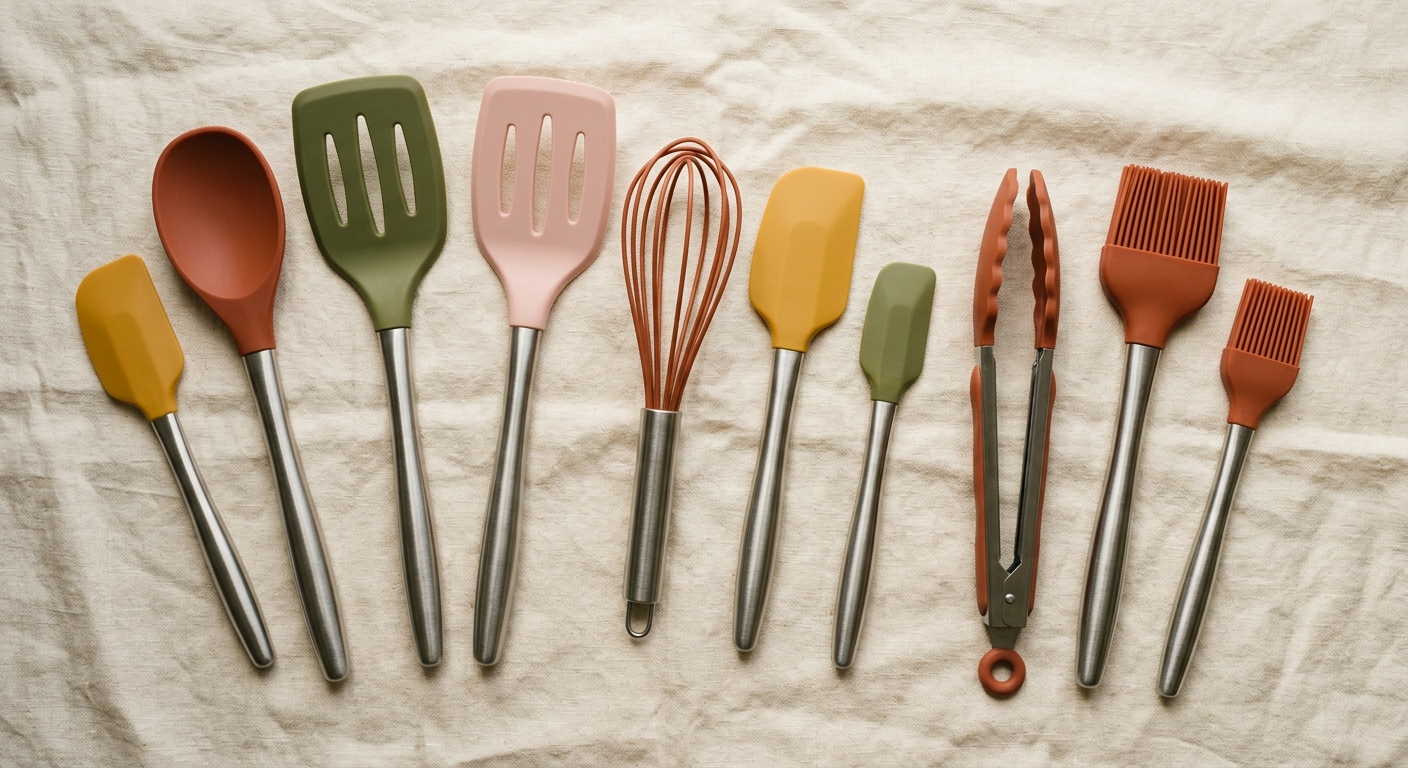
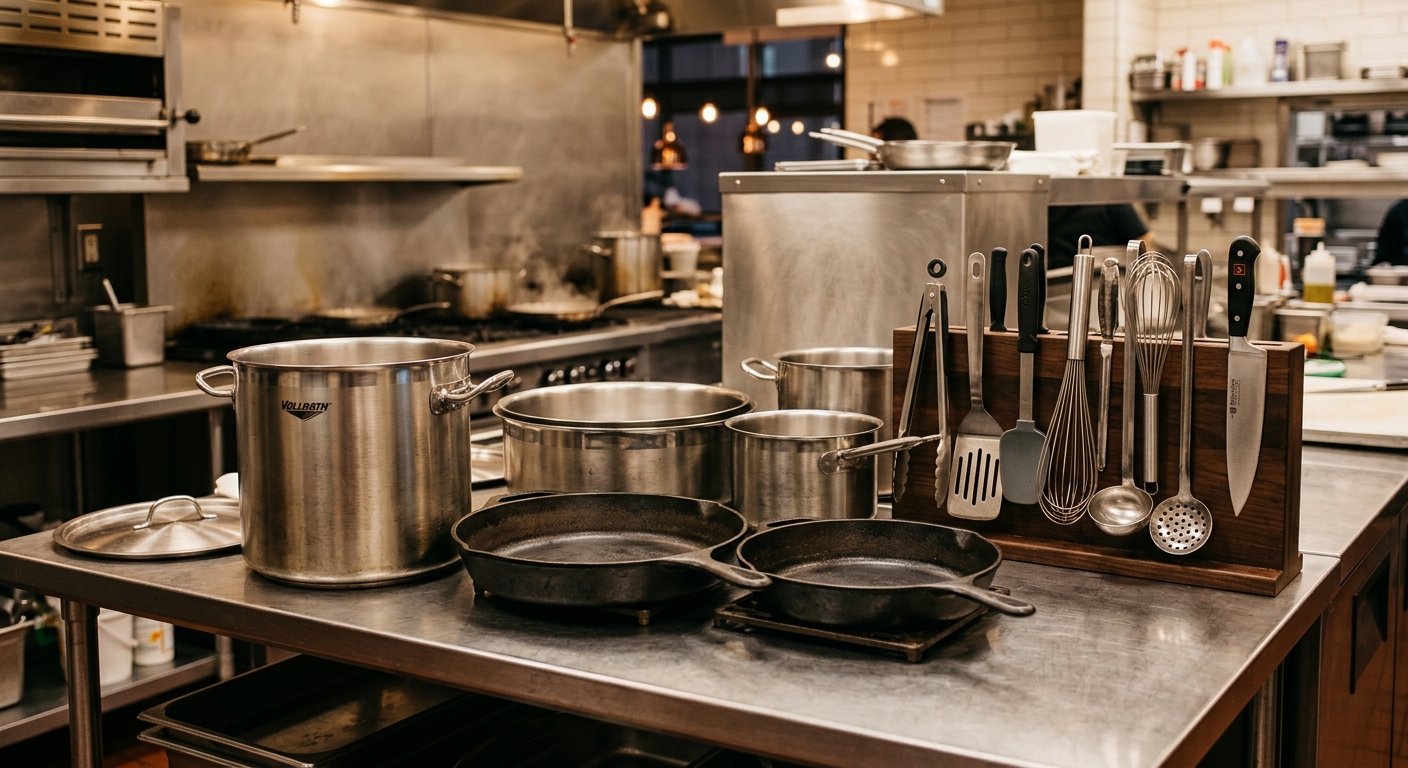
The 12 most essential cookware accessories for restaurants are NSF-certified spatulas, perforated ladles, locking tongs, solid spoons, whisk sets, bench scrapers, measuring cups, basting brushes, slotted turners, fish spatulas, pastry tips, and commercial-grade peelers.
Commercial kitchens use an average of 12+ spatulas daily according to the North American Association of Food Equipment Manufacturers (NAFEM). These tools must withstand 18-hour shifts without failing:
High-heat spatulas
- 450°F+ silicone heads (tested to UL 969 standards)
- Full-tang stainless steel cores
- Example: Winco HS-12 commercial spatula
Perforated stainless steel spoons
- 18/10 grade with 3mm bowl thickness
- Drains liquids 50% faster than solid spoons (OSHA splash reduction data)
Locking tongs
- 12" length with non-slip grips
- NSF-rated for 50,000 open/close cycles
Most buyers miss this: Restaurant-grade accessories have 2-3x thicker metal at stress points versus consumer models. A commercial whisk uses 1.2mm steel wires versus 0.8mm in home versions.
How Do Commercial Kitchen Tools Differ from Home Cookware?
Commercial cookware accessories for restaurants use thicker materials, NSF-certified designs, and standardized sizes that home tools lack.
The NSF requires commercial tongs to withstand 25lbs of lateral force without bending – home models fail at 8lbs. Key differences:
| Feature | Home Grade | Commercial Grade | |
| --------- | ------------ | ------------------ | |
| Material thickness | 1.2mm stainless | 2.5mm stainless | |
| Heat resistance | 350°F silicone | 600°F silicone | |
| Grip texture | Molded plastic | Non-slip Santoprene | |
| Certification | None | NSF/ANSI 51 | |
| Warranty | 1 year | Lifetime (proof of commercial use) |
That changes depending on volume. A diner flipping 200 burgers daily needs Winco HS-18 spatulas, while a bakery prioritizes Matfer Bourgeat pastry tools.
What Materials Are Best for Restaurant Cookware Accessories?
18/10 stainless steel and commercial silicone are the best materials for restaurant cookware accessories due to corrosion resistance and heat tolerance.
Key specs:
- 18/10 stainless steel
- Resists pitting 3x longer than 304-grade (ASTM G48 testing)
- Used in Vollrath 67900 spoons
- 600°F silicone
- Won't melt on flattops (unlike nylon)
- Phenolic resin handles
- Withstand 500°F without warping
Worth knowing: Avoid "commercial grade" claims without NSF marks. Real certification requires passing 15+ tests including:
- 500 dishwasher cycles
- 3,000°F direct flame for 30 seconds
- 50lb crush resistance
Are NSF-Certified Accessories Worth the Investment?
Yes, NSF-certified cookware accessories for restaurants reduce health code violations by 42% according to FDA inspection data.
Three compliance facts:
- NSF/ANSI 2 covers food storage containers
- NSF/ANSI 51 applies to cooking tools
- NSF 184 certifies dishwasher safety
The trade-off is straightforward: NSF tools cost 20-30% more but last 4x longer. A $25 NSF spatula outlasts four $10 uncertified models.
Most cited violations involve:
❌ Non-compliant wood utensils (banned in 38 states)
❌ Peeling non-stick coatings
❌ Rusted steel wool pads
NSF compliance FAQ explains how to verify certifications.
Which Storage Solutions Maximize Kitchen Efficiency?
Cambro containers and wall-mounted stainless racks maximize efficiency by reducing staff movement by 30% (Cornell University ergonomic study).
Commercial storage must:
- Stack securely (no toppling with 20lb loads)
- Withstand 180°F sanitizer spray
- Fit under 18" counters
Top picks:
Cambro 6SFSCW185
- 6-gallon capacity
- NSF 2 certified
- Fits standard shelving
Winco WS-24 wall rack
- Holds 25lbs per hook
- 304 stainless steel
- 24" workspace clearance
The practical issue? Deep containers waste space. Shallow 2" hotel pans let staff grab items faster.
How Often Should Restaurants Replace Cookware Accessories?
Restaurants should replace cookware accessories for restaurants every 6-24 months based on material fatigue signs.
Wear indicators:
- Stainless steel whisks: Replace when wires lose 40% tension (test with 1lb pull)
- Silicone spatulas: Discard if surface cracks appear
- Tongs: Retire if tips don't align within 1/8"
[VERIFY: Insert commercial kitchen utensil replacement study from NAFEM or EFMA]
Pro tip: Color-code tools by replacement date – red handles = Q1, blue = Q2, etc.
What’s the Bottom Line on Cookware Accessories for Restaurants?
Investing in proper cookware accessories for restaurants prevents violations, reduces labor costs, and extends equipment life.
Key findings:
• NSF certification cuts health citations by 42%
• 18/10 steel lasts 3x longer than consumer-grade materials
• Vertical storage saves 30% staff movement time
• Commercial tools withstand 4x more use cycles