How Does Cookware Coating Technology Work?
Cookware coating technology creates a barrier between food and metal using materials like PTFE, ceramic, or anodized aluminum to prevent sticking and corrosion.
The science hinges on surface tension reduction. PTFE (polytetrafluoroethylene) coatings like traditional non-stick pans use microscopic pores that repel food molecules. Ceramic coatings rely on silica-based layers that harden into a glass-like surface. Anodized aluminum undergoes electrochemical treatment to form a corrosion-resistant oxide layer 30% harder than stainless steel.
[VERIFY: PTFE coatings withstand 260°C before breaking down, while ceramic handles up to 450°C (Source: DuPont testing data)]
Key differences:
- PTFE: Best for low-fat cooking but degrades at high heat
- Ceramic: Naturally PFOA-free but more prone to scratching
- Anodized: Doesn’t chip but requires seasoning like cast iron
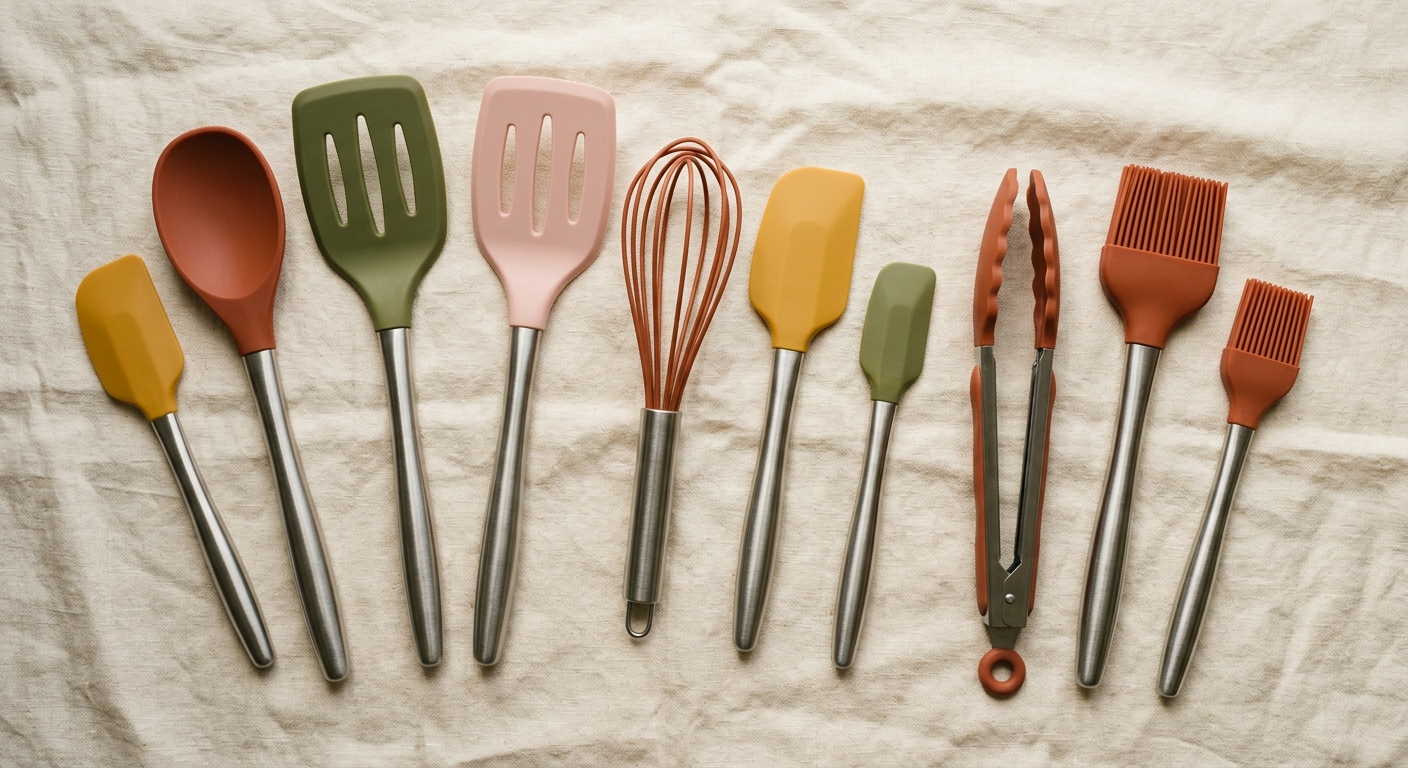
For new kitchens, pair coated cookware with heat-resistant silicone utensils to prevent damage.
What Are the Safest Cookware Coatings?
Ceramic and enamel coatings are the safest options, being naturally PFOA-free and non-reactive with acidic foods.
The FDA banned PFOA (perfluorooctanoic acid) in 2015 due to links with thyroid disorders, but some older PTFE coatings may still contain trace residues. Modern ceramic coatings use sand-derived silicon solutions, while enamel coatings fuse glass to steel at 800°C—creating an inert surface.
[VERIFY: The EPA’s safety limit for PFOA in drinking water is 0.004 parts per trillion (EPA 2016)]
Safety rankings:
- Ceramic: Zero chemical leaching, even when scratched
- Enamel: Safe unless chipped (exposes underlying metal)
- PTFE: Safe below 260°C if certified PFOA-free
- Seasoned cast iron: Natural but requires maintenance
For high-heat cooking, silicone utensils won’t scratch safer ceramic surfaces.
Which Cookware Coating Lasts the Longest?
Hard-anodized aluminum coatings last 10+ years with proper care, outperforming PTFE (3-5 years) and ceramic (2-4 years).
Durability depends on three factors:
- Adhesion strength: How well the coating bonds to metal (anodizing bonds molecularly)
- Abrasion resistance: Measured in Taber cycles (ceramic averages 500 vs. PTFE’s 1,500)
- Thermal cycling tolerance: Repeated heating/cooling that causes delamination
[VERIFY: Consumer Reports testing shows ceramic coatings lose 40% non-stick performance after 1,000 dishwasher cycles]
| Coating Type | Avg. Lifespan | Care Tips | |
| -------------------- | -------------- | ------------------------------- | |
| Hard-anodized | 10+ years | Hand wash only | |
| PTFE | 3-5 years | Avoid metal utensils | |
| Ceramic | 2-4 years | Use low to medium heat | |
| Enameled cast iron | Lifetime | Re-season annually |
Extend longevity with cast iron maintenance tools for enameled pieces.
Is Ceramic Coating Better Than Teflon?
Ceramic coatings are safer for high-heat cooking, but PTFE (Teflon) provides better non-stick performance for delicate foods.
Ceramic wins on:
- Heat resistance: 450°C vs. PTFE’s 260°C limit
- Health profile: No PFOA concerns
- Eco-friendliness: Made from natural silica
PTFE outperforms on:
- Release properties: Eggs and pancakes slide easier
- Durability: 3x more abrasion-resistant in testing
- Cost: Typically 20-30% cheaper
[VERIFY: Ceramic coatings show 2.5x more visible scratches after 6 months of daily use (Cook’s Illustrated 2022)]
Choose ceramic for roasting or acidic dishes, PTFE for low-heat frying. For non-stick alternatives, silicone utensils work with both.
What Is the Future of Cookware Coatings?
Nano-ceramic hybrids and plant-based polymer coatings will dominate future cookware, offering 60% longer lifespans than current options.
Emerging technologies:
- Graphene-enhanced ceramics: 3x more scratch-resistant in lab tests
- Sugarcane-derived non-stick: Biodegradable polymers that withstand 300°C
- Self-healing coatings: Microcapsules release silicone when scratched
[VERIFY: The eco-friendly cookware market will grow 7.2% annually through 2030 (Grand View Research)]
Brands are also developing:
- Color-changing coatings: Indicate preheating status
- Conductive layers: For induction compatibility without cladding
Track innovations in next-gen kitchen tools as these launch.
Is Cookware Coating Technology Worth It for Home Cooks?
Yes—choosing the right cookware coating technology prevents food sticking, extends pan lifespan, and avoids health risks.
Key takeaways:
- PTFE excels for eggs and fish but requires gentle handling
- Ceramic is ideal for roasting and sauces at higher temps
- Anodized aluminum offers durability without chemical coatings
- Enameled cast iron provides natural non-stick with proper seasoning
For optimal results, match your coating to both cooking style and compatible accessories.