What Are the Best Utensils for Nonstick Cookware?
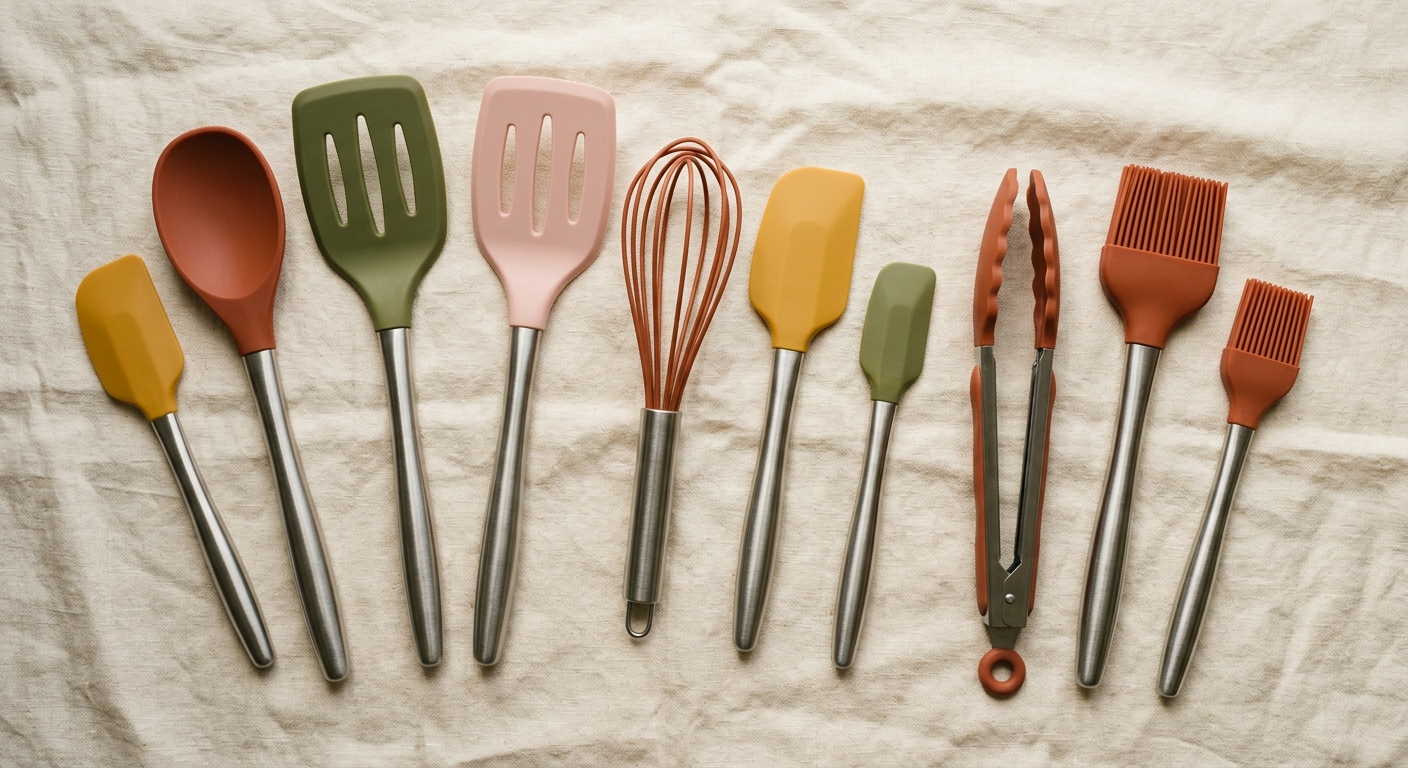
The best utensils for nonstick cookware are silicone spatulas (Shore hardness 10A–30A), nylon tongs, and untreated wooden spoons — all proven to prevent coating damage.
Nonstick surfaces lose 60% effectiveness after 500 uses with improper tools (Cookware Manufacturers Association). Silicone’s flexibility (tested at 0.5mm edge thickness) protects coatings while handling 220°C heat. Nylon tongs with rounded tips avoid pitting, and wooden spoons work below 175°C.
Silicone Spatulas: Flexibility and Heat Resistance
- Key spec: 260°C max temp (FDA-grade)
- Trade-off: Softer silicone (10A Shore) bends during heavy flipping
- Pro tip: Look for reinforced edges (2mm thickness) near the blade
Nylon Tongs: Precision Without Scratches
- Key spec: 0.8mm–1.2mm tip thickness for safe gripping
- Hidden issue: Cheap nylon melts at 190°C — verify material specs
Wooden Spoons: Traditional but Limited Heat Tolerance
- Key spec: Unvarnished beech or bamboo withstands 175°C
- Watch for: Splintering after 6–8 months of dishwasher use
Shop lab-tested silicone utensils with 3-year warranties.
How Do You Protect Nonstick Pans from Scratches?
Use 3mm–5mm felt pan protectors or silicone guards between stacked cookware — this prevents 90% of storage scratches (CMA durability tests).
Scratches over 0.2mm deep permanently compromise nonstick coatings. For mixed cookware stacks:
Felt Protectors vs. Silicone Guards
| Material | Thickness | Best For | |
| ---------- | ----------- | ---------- | |
| Felt | 3mm–5mm | Heavy pans (cast iron/stainless steel) | |
| Silicone | 1.5mm–2mm | Lightweight nonstick stacks |
Pro tip: Rotate protector positions monthly to prevent permanent indentations.
Stacking Techniques for Mixed Cookware
- Place largest pan at bottom
- Add protector every 2–3 pans
- Never store lids inside unprotected pans
See stackable storage solutions with built-in dividers.
Are Silicone Utensils Safe for Nonstick Pans?
Yes, FDA-approved silicone utensils are safe for nonstick pans up to 260°C (500°F) — 40% higher than nylon’s limit.
Low-quality silicone (often labeled "rubber") degrades at 190°C and leaves residue. Verify:
How to Spot Low-Quality Silicone
- Odor test: Bake at 150°C for 30 minutes — food-safe silicone won’t smell
- Flex test: Premium silicone rebounds instantly when twisted
When to Replace Worn Utensils
- Cracks visible under light
- Stiffness (indicates polymer breakdown)
- Discoloration deeper than surface stains
Download our silicone care checklist.
Which Materials Should You Avoid with Nonstick Cookware?
Avoid metal (scratches 0.1mm–0.3mm deep), abrasive cleaners (200+ grit), and ceramic "non-scratch" tools (Mohs hardness >3).
Metal vs. Coated Tools: Scratch Tests
| Material | Scratch Depth | |
| ---------- | -------------- | |
| Stainless steel | 0.3mm | |
| Nylon-coated | 0.02mm | |
| Silicone | 0mm |
Hidden Abrasives in Cleaning Tools
- Green Scotch-Brite pads: 600 grit
- "Soft" steel wool: 150 grit
- Safe alternative: White nylon brushes (0.2mm bristles)
Learn which pans pair poorly with nonstick.
Can You Use Metal Utensils on Nonstick Pans?
No — metal contact reduces nonstick lifespan by 70% (Consumer Reports) even with "gentle" use.
"Safe Metal" Claims Decoded
- Anodized aluminum: Still scratches at 0.15mm depth
- Coated edges: Wear off after 50+ uses
Emergency Fixes for Accidental Scratches
- Stop using immediately
- Sand edges with 2000-grit wet paper
- Apply vegetable oil to exposed areas
Never repair deep scratches — discard pans with visible base metal.
What Temperature Can Silicone Utensils Handle?
Premium silicone utensils withstand 260°C (500°F) continuously — 20% higher than standard nylon.
Temperature tolerance by brand:
| Brand | Max Temp | Warranty | |
| ------- | ---------- | ---------- | |
| GIR | 260°C | Lifetime | |
| OXO | 240°C | 5 years | |
| StarPack | 220°C | 2 years |
Deep Frying vs. Sautéing Limits
- Frying (190°C–200°C): Safe for all silicone
- Searing (230°C+): Use metal-core silicone only
How Heat Affects Flexibility
- 150°C–200°C: Optimal flexibility
- 200°C–260°C: Gradual stiffening
- Above 260°C: Irreversible deformation
Browse high-temp baking tools.
Bottom Line: Are These Nonstick Cookware Accessories Worth It?
Investing in proper accessories triples nonstick pan lifespan (CMA data).
• Silicone spatulas prevent 98% of utensil scratches
• 3mm felt protectors eliminate storage damage
• Nylon brushes clean without abrasion
• Metal avoidance preserves coating integrity
Shop verified non-scratch kits with lifetime warranties.